
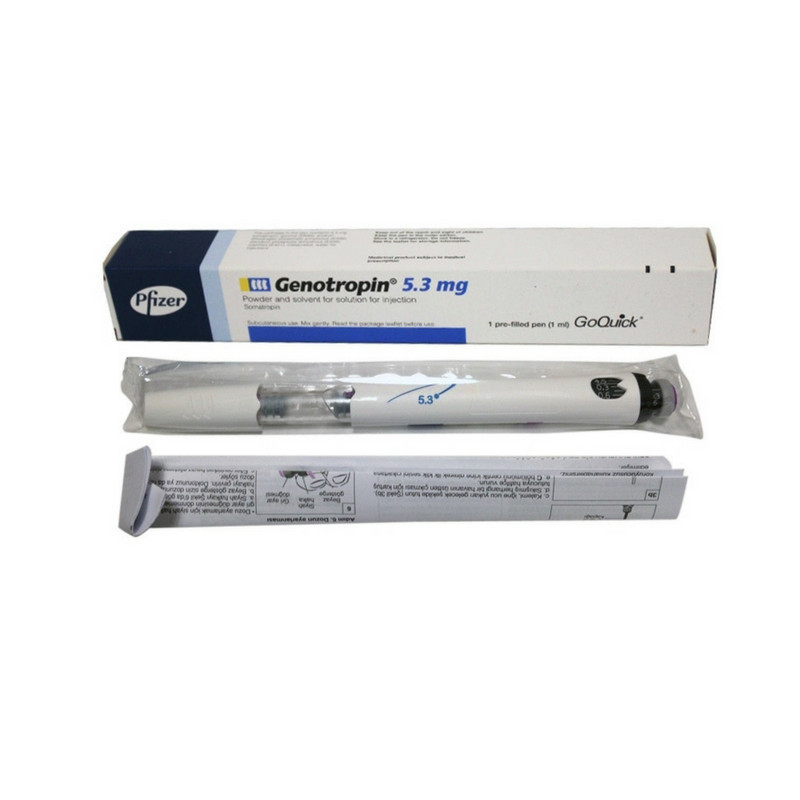
Genotropin 16 IU (5.3 MG) GoQuick
- Brand: Pfizer
- Product Code: Genotropin 16 IU (5.3 MG) GoQuick
- Availability: In Stock
-
$207.00
ACTIVE HALF-LIFE
2.5-3 hours
CLASSIFICATION
Peptide Hormone
DOSAGE
Men 4-10 IU/day
ACNE
No
WATER RETENTION
No
HBR
No
HEPATOTOXICITY
No
AROMATIZATION
No
MANUFACTURER
Pfizer
WAREHOUSE
International Warehouse 2
SUBSTANCE
Somatropine - 191 Amino Acid
,
Human Growth Hormone (HGH), also referred to as somatotropin or somatropin, is a peptide hormone that promotes growth, cell reproduction, and regeneration in both humans and animals. This hormone acts as a mitogen, affecting specific cell types. HGH is a polypeptide consisting of 191 amino acids, which is produced, stored, and released by somatotropic cells found in the lateral wings of the anterior pituitary gland. Several factors, including diet and physical activity, can influence the secretion of HGH.
HGH prompts body cells to grow larger and divide more rapidly than normal. Additionally, it facilitates the transportation of amino acids across cell membranes and boosts the rate at which cells convert these compounds into proteins, resulting in an anabolic effect that aids in muscle development. HGH also enables cells to lower their usual carbohydrate usage while increasing fat utilization. Research has shown that fat loss and increases in lean muscle mass can be observed at doses as low as 0.028 iu/kg daily over 24 weeks. Furthermore, HGH stimulates the production of IGF-1.
In medicine, HGH is used to address growth disorders in children and deficiencies in adults. Studies consistently indicate that modulating HGH can lead to various beneficial effects, such as:
Additionally, multiple studies, particularly those involving HGH-deficient individuals, have highlighted the hormone's importance in mental and emotional health, as well as in sustaining energy levels. Adults with HGH deficiency tend to experience higher rates of depression compared to their counterparts.
There is also research on HGH's potential impact on cognitive abilities, including learning and memory. It appears to enhance cognitive function in humans and may be beneficial in treating cognitive impairments stemming from HGH deficiency.
Since at least 1982, HGH has been misused by athletes in sports as an anabolic agent. While it is effective in promoting significant muscle gain, it is less effective for enhancing strength. Competitors in the 1970s and particularly in the 1980s began to exhibit more sculpted musculature, reminiscent of classical sculptures, likely without increasing cardiovascular workouts and just by consuming more lean protein.
HGH tends to exhibit greater positive results when used alongside a steroid cycle rather than alone. As such, it is often considered suitable for cutting cycles to achieve lean muscle and fat loss.